
ASM and Pusat IDEA Collaborate on Impact-Driven Research
March 19, 2026
Prof Yoo Hang Kim Young Women Scientists Award 2026: Applications Open
April 6, 2026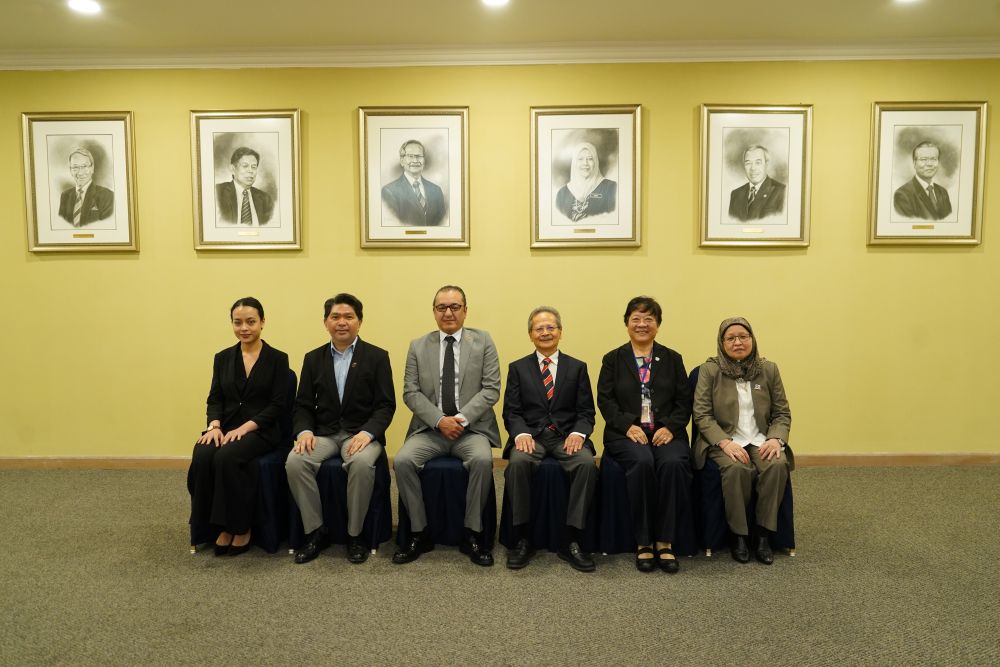
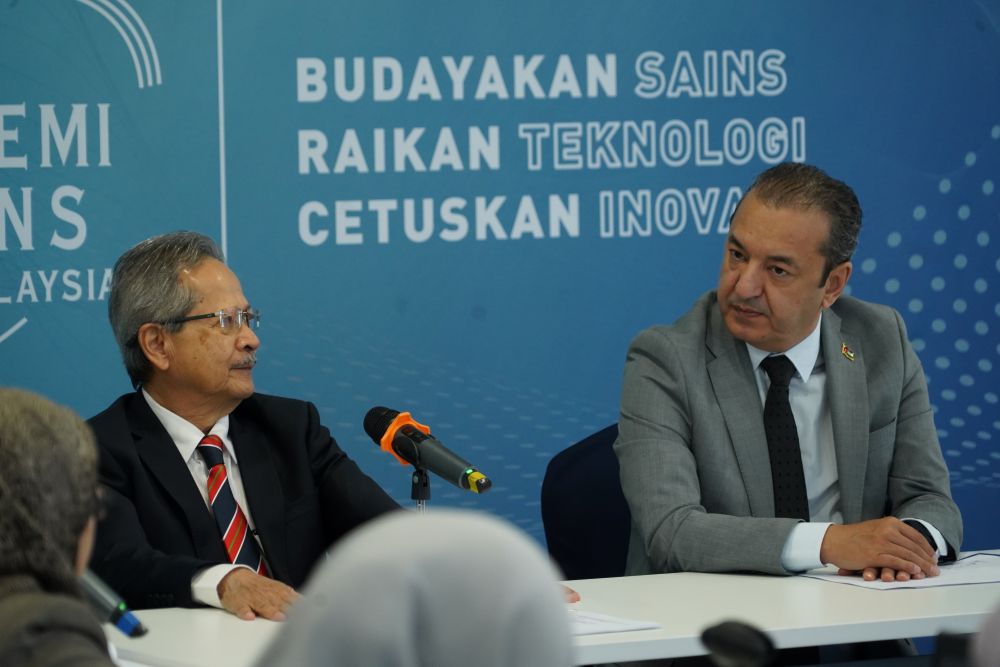
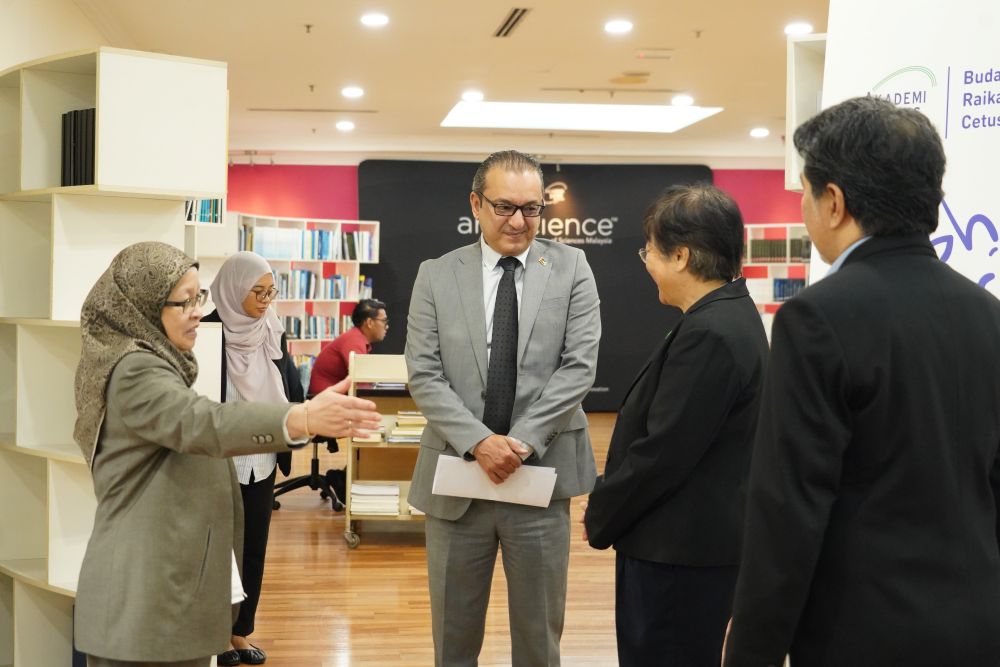
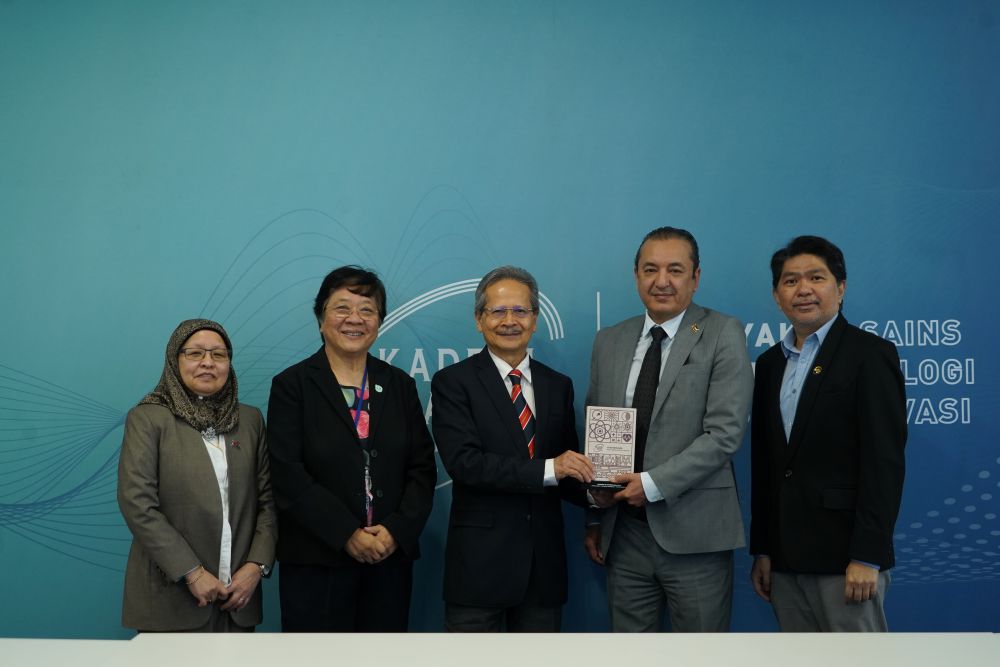
On 2 March 2026, ASM welcomed a courtesy visit from Ambassador Extraordinary and Plenipotentiary of the Hashemite Kingdom of Jordan, His Excellency Dr Ismael Maddallah Suliman Maaytah, providing an opportunity to exchange perspectives on global developments and explore avenues for scientific collaboration between Malaysia and Jordan.
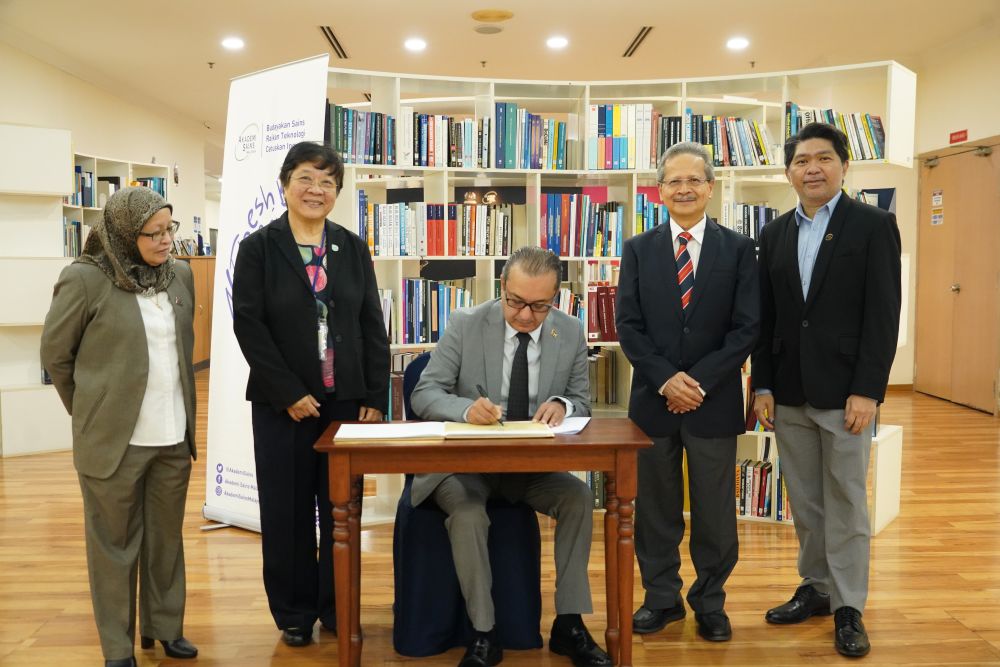
During the engagement, ASM President, Academician Datuk Dr Tengku Mohd Azzman Shariffadeen FASc, highlighted the current global transition into what scholars describe as a postnormal era, characterised by chaos, complexity, and contradictions.
He noted that the global economy is increasingly shaped by “creative destruction”, where technological transformation continuously reshapes industries and societies.
In this context, the growing influence of information and communication technologies (ICT), as well as the emergence of “cloud capital”, where data becomes a powerful source of influence and control were also discussed.
The Ambassador shared similar views on the evolving global landscape and conveyed Jordan’s interest in strengthening collaboration with Malaysia, particularly through exchanges of experts and researchers.
ASM representatives also highlighted the ASM’s role in contributing policy papers to ASEAN and supporting national science governance through close engagement with the National Science Council, chaired by the Prime Minister.
To date, ASM has completed more than 100 policy studies addressing various aspects of Malaysia’s STI ecosystem, with foresight studies remaining an important component of its work.
The discussion also highlighted the ongoing collaboration under the Research, Development, Innovation, Commercialisation & Economy (RDICE) framework, involving the key funding bodies of both countries: the Malaysia Science Endowment (MSE) and Jordan’s National Center for Research and Development (NCRD).
A Memorandum of Understanding (MoU) is anticipated to be formalised by May 2026, marking a significant milestone in bilateral science diplomacy.
The agreement is expected to enable jointly funded programmes, creating avenues for researchers from Malaysia and Jordan to collaborate on innovative projects, particularly in the health and food sectors.
Opportunities for collaboration among young scientists and initiatives to strengthen information technology capabilities were also highlighted.
Participants further discussed potential institutional and capacity-building cooperation. Jordan has shown interest in establishing an academy of sciences, drawing inspiration from ASM’s institutional framework.
ASM indicated its openness to further discussions after previously sharing its governing Act. It was also noted that many Jordanian researchers are alumni of programmes organised by the International Science, Technology and Innovation Centre (ISTIC), including workshops on artificial intelligence and big data.
The conversation also highlighted the expanding use of synchrotron technology in archaeology and archaeometry, particularly relevant to Middle Eastern heritage research, such as studies of collagen preservation in ancient bones.
The visit concluded with mutual interest in strengthening Malaysia–Jordan scientific engagement through future exchanges, joint programmes, and collaborative initiatives.