Malaysia Champions STI at APEC SOM3 in Incheon
September 18, 2025

YSN-ASM Scientists Support Nationwide STI100³ Programme
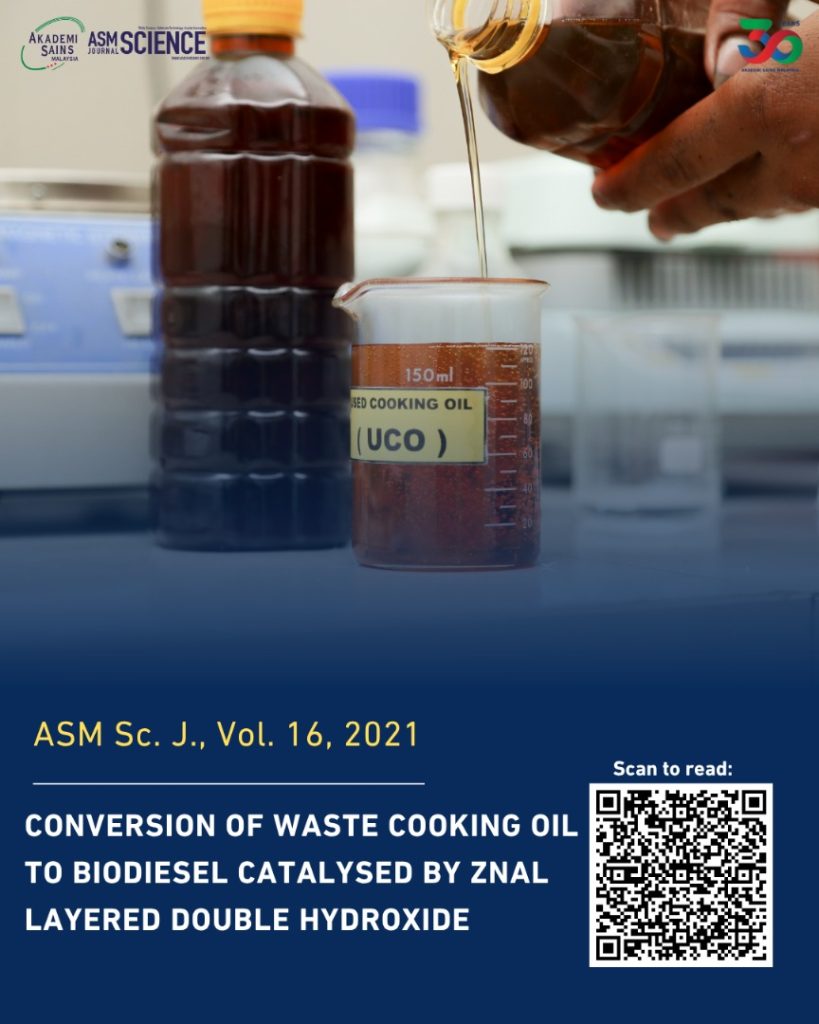
September 18, 2025This study explored how to turn waste cooking oil (WCO) into biodiesel using a catalyst made from zinc–aluminium layered double hydroxides (ZnAl-LDH). The researchers prepared two versions of the catalyst with different metal ratios (4:1 and 3:1) using an alkali-free method. Instead of the usual sodium hydroxide, they used ammonia and ammonium carbonate to avoid unwanted sodium contamination in the catalyst.
Before using the catalyst, the researchers checked its structure. The LDH material had neat, layered crystals at first, but when heated to 250 °C, these layers broke apart and turned into mixed metal oxides, mainly zinc oxide. They chose 250 °C because thermal tests showed that the carbonate ions inside the layers start to break down at that temperature. Scanning electron microscope (SEM) images showed the material changing from smooth layers to a more irregular shape after heating. The surface area also increased a bit, which is good for catalytic reactions. Fourier Transform Infrared (FT-IR) tests confirmed that carbonate ions were present before heating and gone afterward.
The waste cooking oil was first cleaned by removing food particles, checked for water content, and tested for free fatty acids (FFA). The FFA level was low enough that only a single transesterification step (not the usual two-step process) was needed.
For biodiesel production, the researchers reacted the treated oil with methanol using the calcined ZnAl-LDH catalyst as a solid base catalyst. After the reaction and purification, the biodiesel was analysed using gas chromatography. The main fatty acid methyl esters detected were laurate, myristate, palmitate, linoleate, and stearate. The biodiesel yield was about 28.5% for the 3:1 catalyst and 32.7% for the 4:1 catalyst.
In conclusion, the alkali-free method successfully produced ZnAl-LDH catalysts that could convert waste cooking oil into biodiesel. Heating the material at 250 °C effectively transformed it into an active mixed-oxide catalyst. The 4:1 Zn:Al catalyst performed slightly better, giving a higher biodiesel yield. Overall, the study supports the use of waste cooking oil and environmentally friendlier solid catalysts for biodiesel production.