

STEM Youth Program 2025 Inspires Pupils in Penang
September 18, 2025
Inspirasi Saintis Muda: Ts ChM Dr Khalisanni bin Khalid
October 15, 2025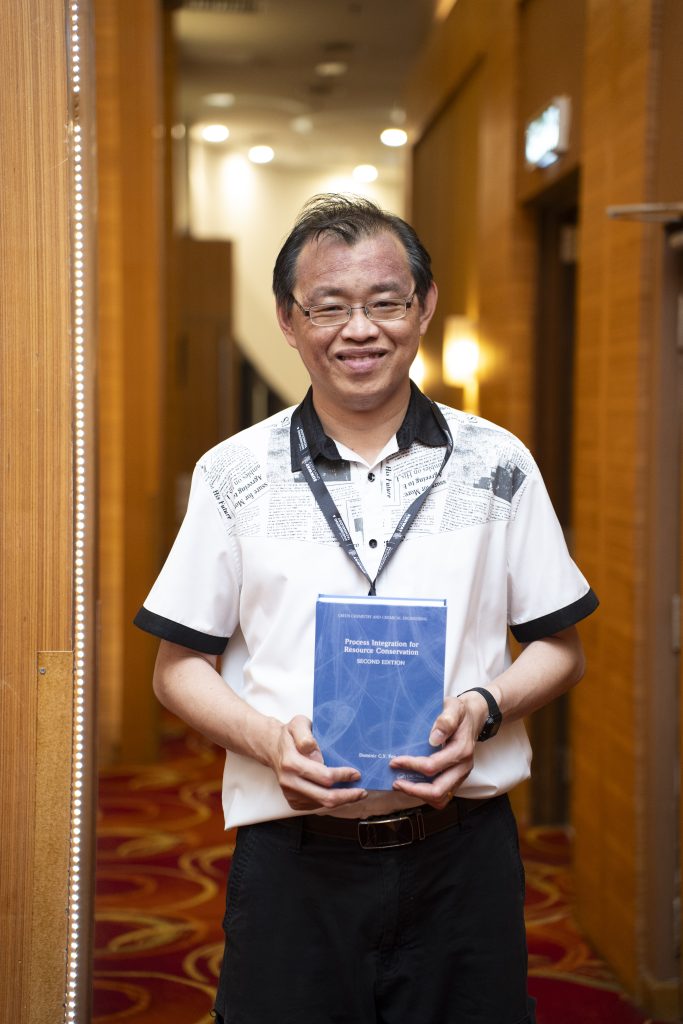
The philosophy of the 3Rs – reduce, reuse, and recycle – has long shaped both daily life and industrial practice, and one of the leading figures advancing its application in modern industry is Professor Dominic Foo FASc from the University of Nottingham Malaysia.
Initially driven by economic motives to cut costs through waste minimisation, 3R-based practices have since evolved in response to growing global awareness of environmental sustainability.
The launch of the United Nations Sustainable Development Goals (UN SDGs) in 2015 further strengthened this shift, positioning sustainable resource management as a shared global responsibility rather than a mere cost-saving measure.
For industries, however, applying 3R practices is rarely simple. Manufacturing plants must balance efficiency, safety, and environmental goals — a challenge that has driven the development of systematic tools to help engineers optimise processes and reduce waste.
Over the past two decades, Professor Foo and his collaborators from the United States, China, the Philippines, and other countries have advanced the field of process integration — a specialised method in chemical engineering that views industrial processes as interconnected systems rather than isolated units.
This integrated approach has enabled industries such as chemical manufacturing, power generation, semiconductors, and food and beverage production to reduce waste and improve resource efficiency significantly.
These techniques were first comprehensively compiled in his landmark textbook, Process Integration for Resource Conservation, published by CRC Press.
Since the release of the first edition in 2012, Professor Foo has travelled extensively — from ASEAN and Australia to Korea and South Africa — to conduct workshops and share these methods directly with industrial professionals.
More than a decade later, Professor Foo celebrates another milestone with the launch of the second edition of his book.
Dr Dominic and his book.
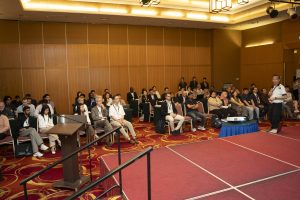
The event took place on 27 August 2025, during the 28th Conference on Process Integration, Modelling and Optimisation for Energy Savings and Pollution Reduction (PRES 2025) in Port Dickson, Malaysia — symbolically, the same conference where he launched the first edition in Prague, Czech Republic, in 2012.
The updated edition reflects major developments in sustainable engineering over the past decade, featuring new tools, case studies, and global best practices for resource conservation.
The book stands as both a professional reference and a testament to Professor Foo’s long-standing commitment to advancing cleaner, more efficient industrial systems.
With sustained contributions to research, teaching, and international collaboration, Professor Foo’s work remains a cornerstone for engineers and sustainability practitioners worldwide—and his latest book marks another significant step toward a more resource-conscious industrial future.