

Advancing Malaysia’s STIE Agenda Together
April 29, 2026
ASM Science Journal: Modelling Malaysia’s Demand of Fresh Meat
April 29, 2026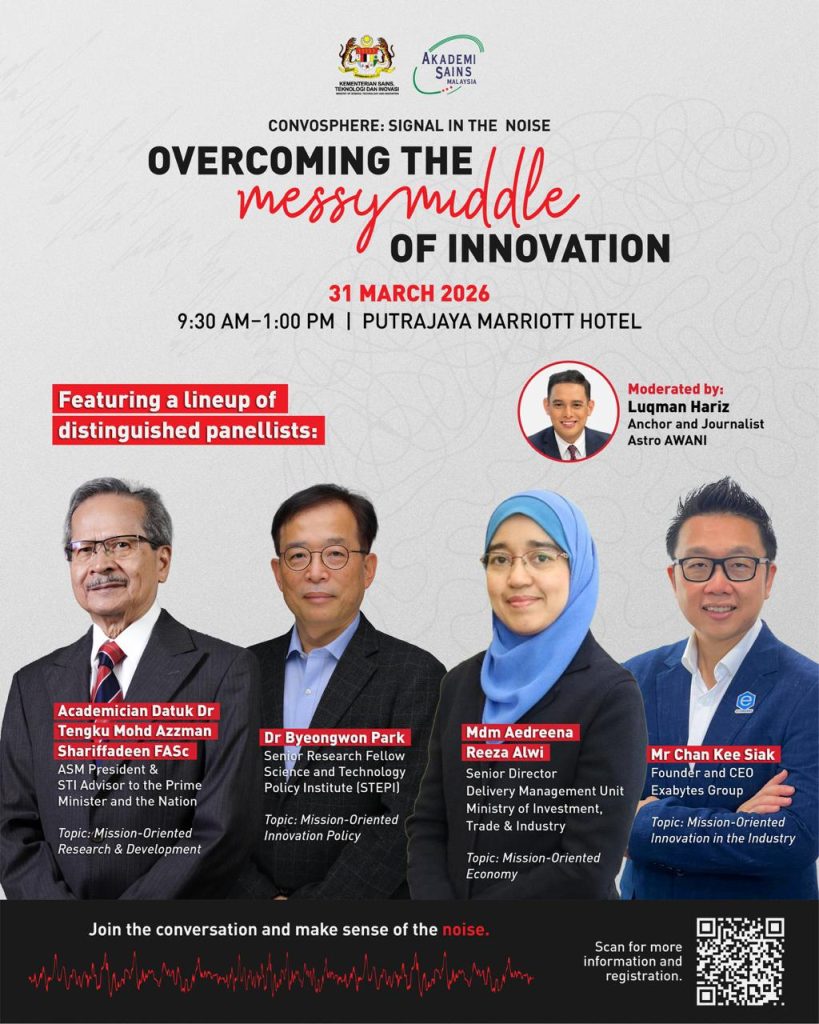
Innovation does not fall short because of a shortage of promising breakthroughs. More often, it falters in the “messy middle”, where fragmentation, weak coordination and misaligned priorities slow progress. To navigate this challenge, a mission-oriented approach offers a way forward by aligning innovation efforts around national economic, societal, and environmental challenges as a clear North Star.
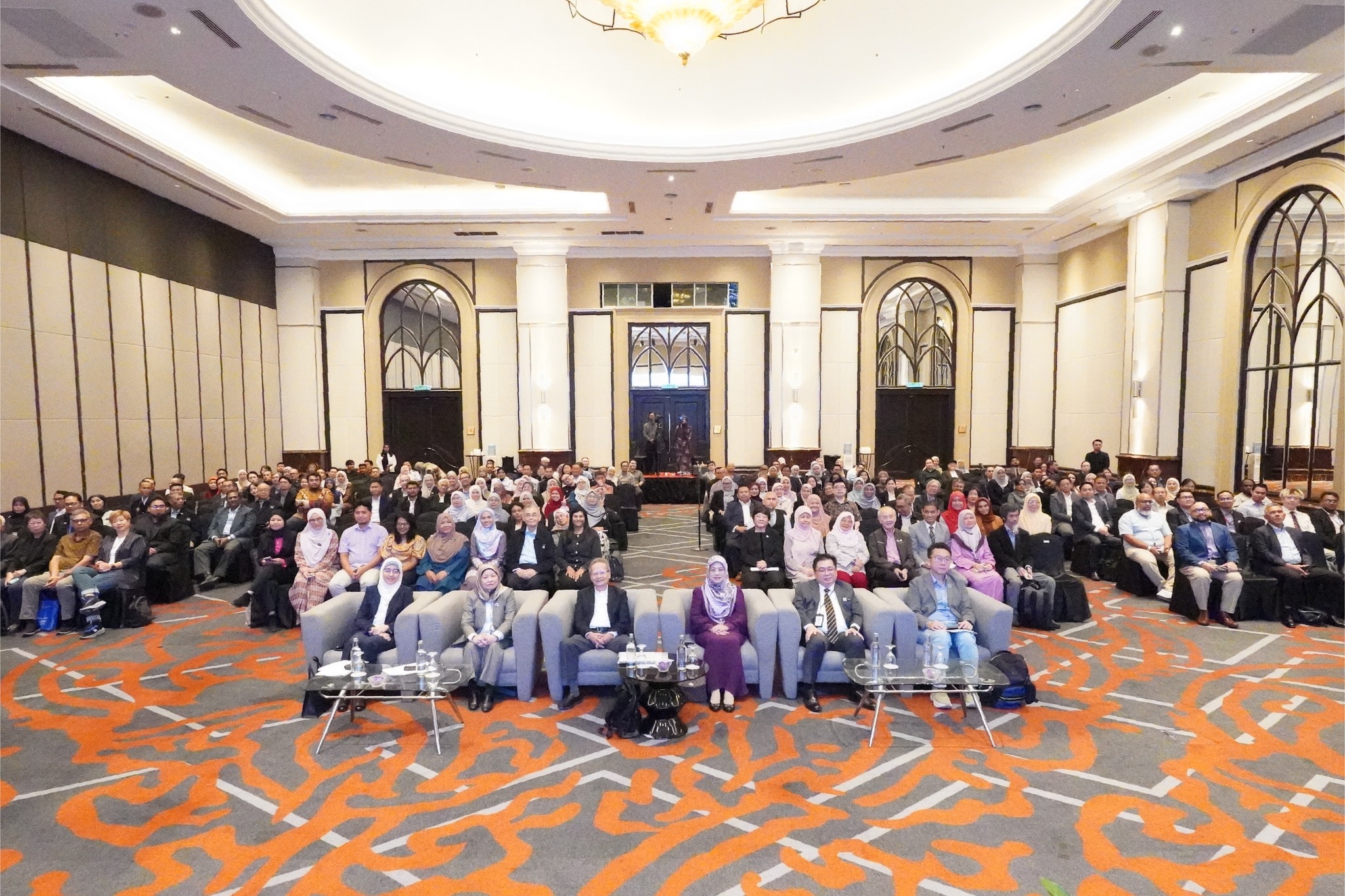
To address this, the Academy of Sciences Malaysia, on 31 March 2026, organised Convosphere: Signal in the Noise, bringing together policymakers, researchers, industry leaders and players in the wider ecosystem to examine how innovation can move more effectively from discovery to real-world outcomes.
In her opening address, Puan Hazami Habib, CEO of ASM, framed the forum as a strategic platform to close the persistent gap between ideas and real-world impact within Malaysia’s STIE ecosystem.
She highlighted that while the country possesses strong research capabilities and innovative talent, too many promising ideas falter in what she termed the “messy middle” of innovation, where execution, coordination, and implementation break down due to silos, misaligned incentives, and regulatory bottlenecks.
Emphasising ASM’s commitment to a mission-oriented approach, she positioned Convosphere as more than just a discussion forum, but a starting point for translating insights into concrete policies and actions by aligning stakeholders, resources, and capabilities towards clear national missions with measurable outcomes.
“By focusing on the messy middle, we are deliberately shifting the conversation—from what we can imagine, to what we can deliver. From aspiration to implementation. From potential to impact.”
Following Puan Hazami’s opening remarks, the panel session commences, which featured ASM President Academician Datuk Dr Tengku Mohd Azzman Shariffadeen FASc, Dr Byeongwon Park (Senior Research Fellow at the Science and Technology Policy Institute (STEPI)), Mdm Aedreena Reeza Alwi (Senior Director of the Delivery Management Unit, Ministry of Investment, Trade and Industry (MITI)), and Mr Chan Kee Siak (founder and CEO of Exabytes Group). The session was moderated by Mr Luqman Hariz (Anchor and Journalist, ASTRO Awani).
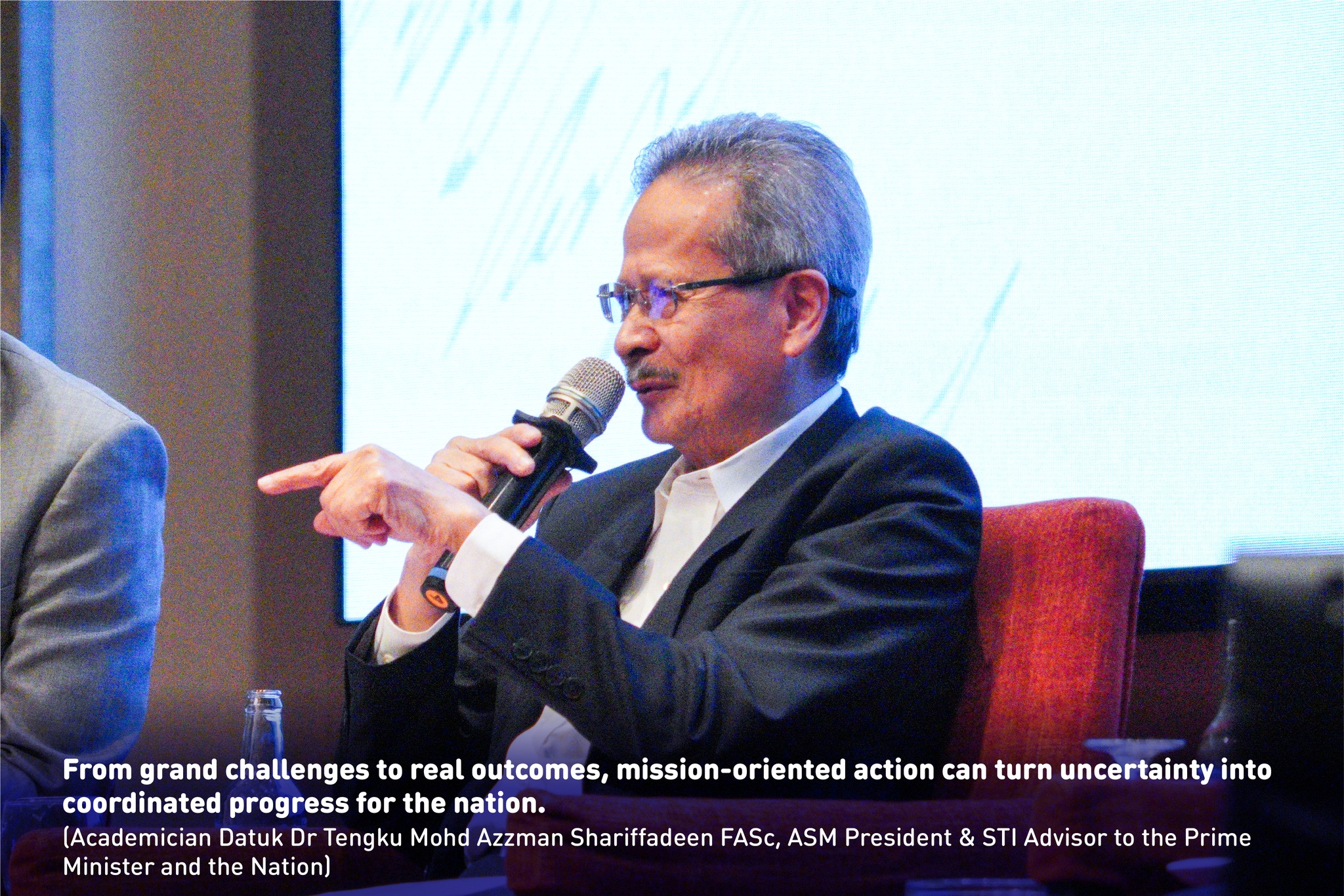
Academician Datuk Dr Tengku Mohd Azzman Shariffadeen FASc, ASM
Academician Datuk Dr Tengku Mohd Azzman Shariffadeen FASc highlighted the RDICE framework as a continuous cycle linking research, innovation, commercialisation and economic growth.
The cycle begins with research and development, where new knowledge is translated into practical solutions, feeding innovation that generates products, processes and services with societal value.
Through commercialisation, these ideas create income, cost savings and measurable impact, ultimately strengthening the economy through productivity gains, job creation and improved quality of life.
However, he noted that Malaysia’s STIE ecosystem, while delivering economic progress between 2000 and 2019, has not achieved comparable societal and environmental outcomes.
The ecosystem remained largely stagnant from 2010 to 2019, with signs of social and environmental regression, underscoring the need to mainstream science, technology and innovation as a core enabler of balanced development.
Datuk Dr Tengku Mohd Azzman also pointed to persistently low industry participation in R&D, despite policy shifts towards experimental development and higher private‑sector expenditure.
With only a small share of businesses investing in R&D, Malaysia remains heavily reliant on public institutions, highlighting the urgency of stronger industry engagement to translate research into economic value.
He further underscored the importance of strengthened governance through the National Science Council framework and a mission‑oriented approach, where clearly defined national challenges are addressed through coordinated action, cross‑sector collaboration and mission projects that turn strategic intent into tangible outcomes aligned with national priorities.
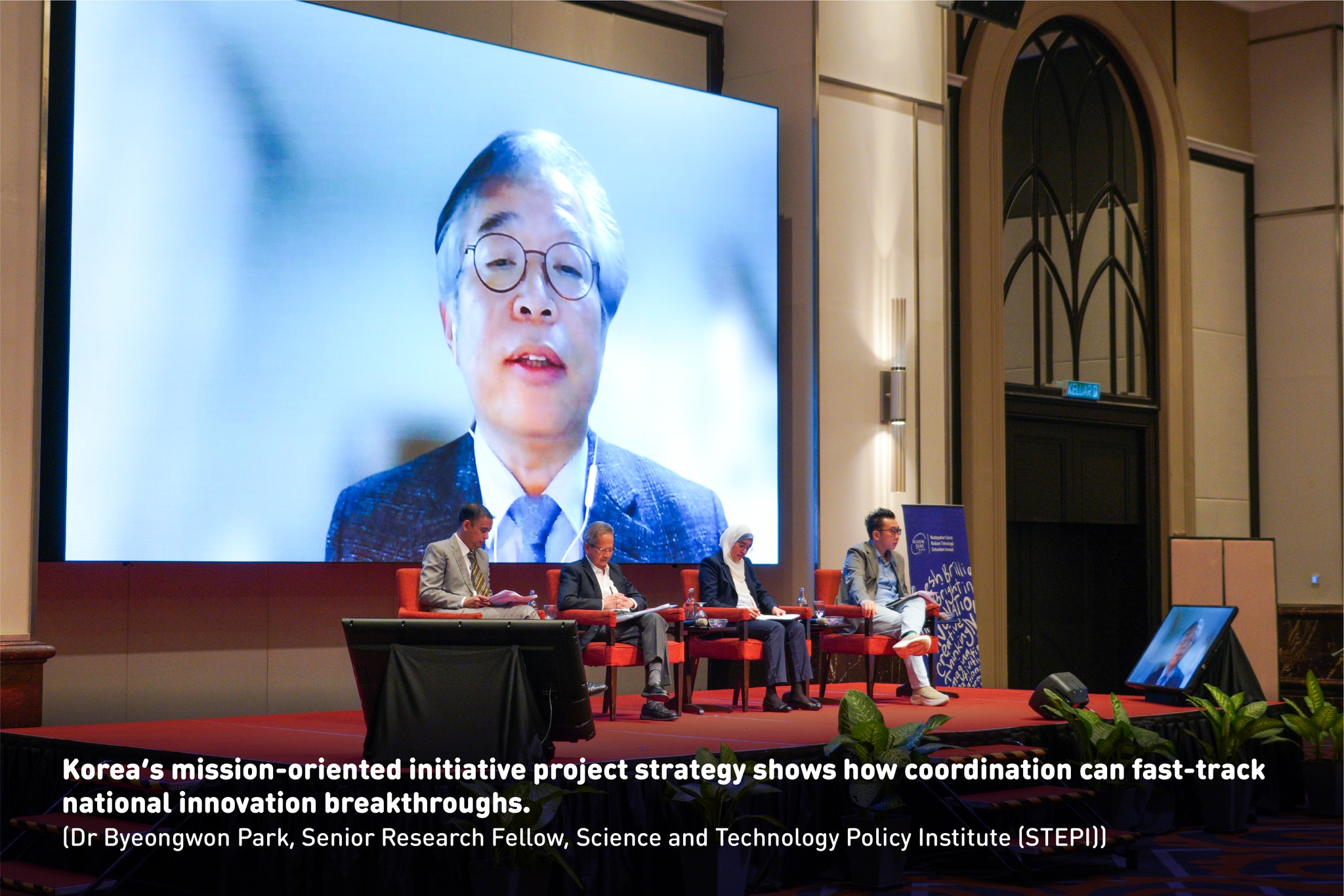
Dr Byeongwon Park, STEPI
Dr Byeongwon Park drew on South Korea’s experience to illustrate both the strengths and limitations of mission‑oriented innovation policy (MOIP).
Korea’s approach demonstrates how strong STI governance, evidence‑based priority setting and sustained cross‑ministerial coordination can accelerate innovation through large‑scale, mission‑driven programmes addressing societal challenges and strategic technologies.
Flagship initiatives, including national social missions and Advanced Research Projects Agency (ARPA)‑style challenge programmes, have supported risk‑taking, long‑term investment and technological leadership.
However, the case also highlighted emerging challenges such as fragmented missions, a technology‑centric bias, coordination complexity and limited portfolio management after mission approval.
The experience underscores that while MOIP can drive rapid innovation, achieving broader systemic and societal transformation requires stronger integration, adaptive governance and balanced attention to social, environmental and economic outcomes.
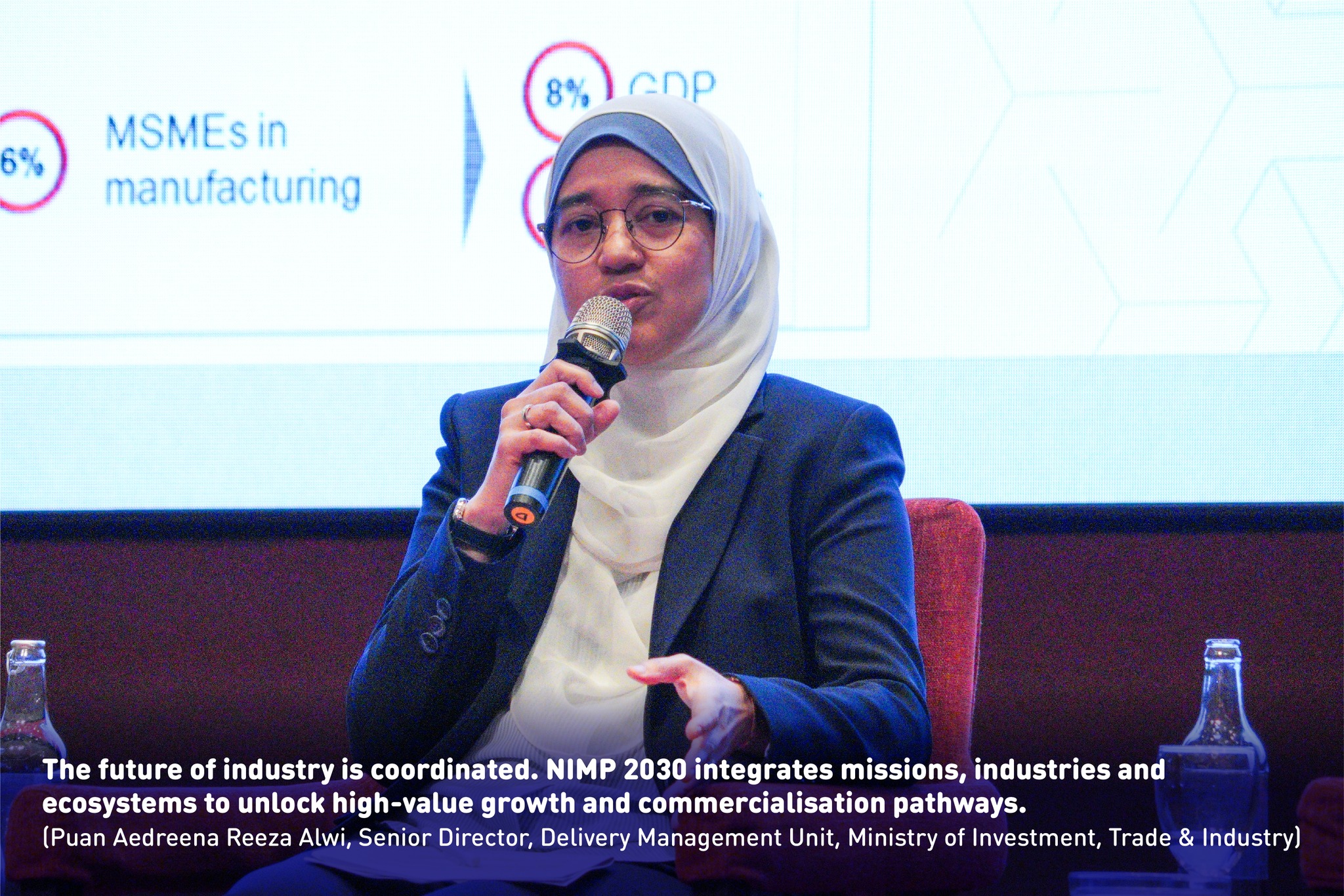
Mdm Aedreena Reeza Alwi, MITI
Madam Aedreena Reeza Alwi outlined how the New Industrial Master Plan (NIMP) 2030 adopts a mission‑based, execution‑focused approach to transform Malaysia’s industrial landscape.
Anchored in a whole‑of‑nation collaboration model, NIMP 2030 aims to build a resilient and competitive manufacturing ecosystem by advancing economic complexity, accelerating digital adoption, pushing towards net‑zero ambitions, and safeguarding economic security and inclusivity.
The plan prioritises high‑value activities across the value chain, stronger research, development, commercialisation and innovation linkages, and the development of new growth sectors such as electric vehicles, renewable energy, advanced materials and carbon capture technologies.
Backed by clear strategies, action plans and mission‑based projects, NIMP 2030 seeks to deliver tangible outcomes by 2030, including higher value‑added growth, better‑quality jobs, rising wages, stronger domestic linkages and sustained industrial competitiveness.
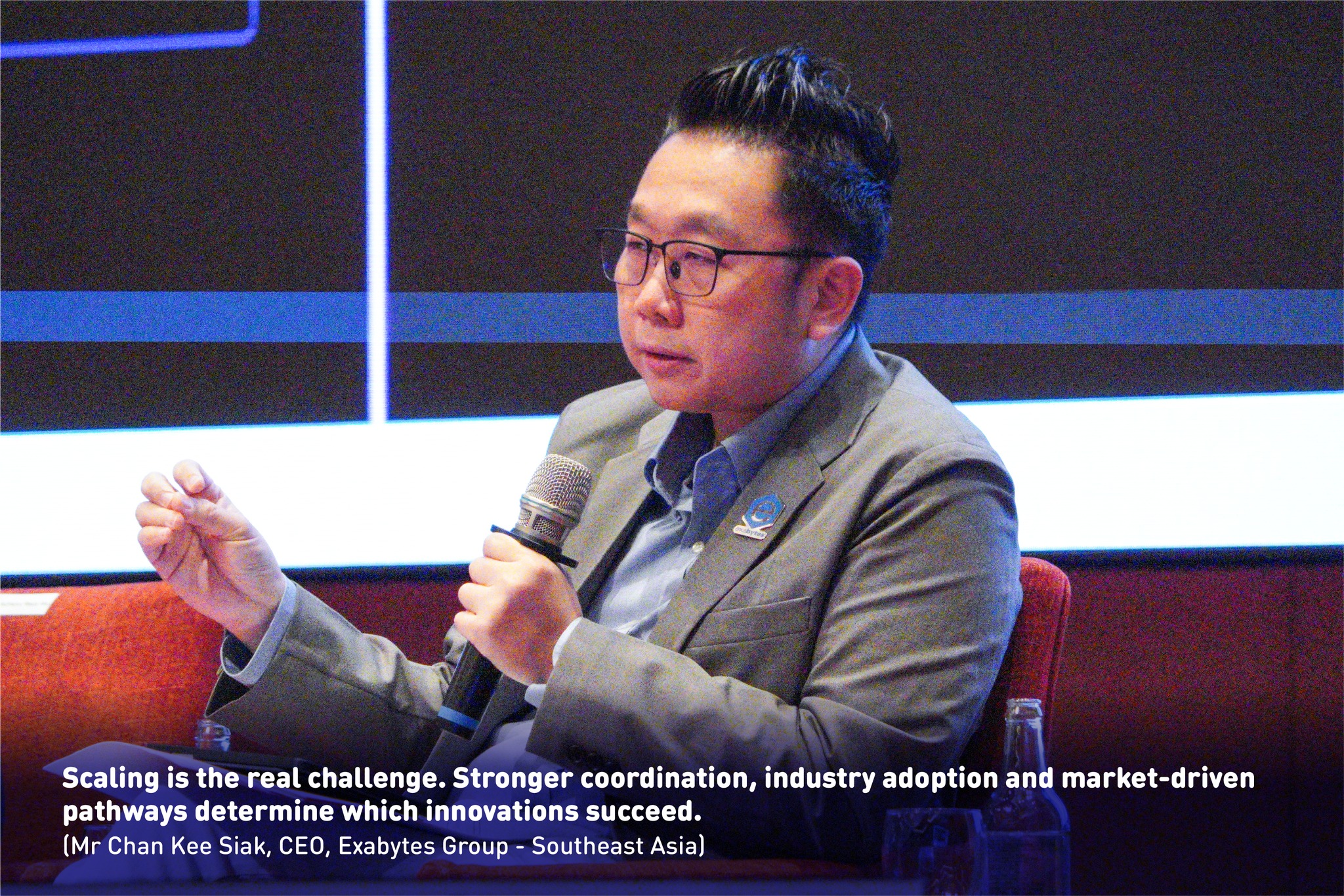
Mr Chan Kee Siak, Exabytes
Mr Chan Kee Siak emphasised that the greatest barrier to innovation lies in the “messy middle”, where promising ideas often stall before achieving scale due to fragmentation, misaligned incentives and unclear ownership.
Drawing from industry experience, he highlighted how siloed approaches, isolated pilots and short‑term performance metrics frequently result in weak commercialisation and limited national impact.
The presentation called for a mission‑oriented STIE ecosystem that moves beyond funding individual projects towards aligning stakeholders around clearly defined, time‑bound challenges.
By orchestrating coalitions across government, industry, academia and users, and leveraging tools such as AI and blockchain to enhance learning, coordination and trust, missions can turn ambition into execution.
Practical examples, including large‑scale SME digitalisation, demonstrated how ecosystem alignment and portfolio‑based experimentation can accelerate adoption, reduce risk and deliver meaningful socio‑economic outcomes.
As innovation grows increasingly complex, this Convosphere session reinforces ASM’s role in convening diverse voices to drive more coordinated, mission-oriented action for a resilient and future-ready STIE ecosystem.