

ASM and MOSTI Strengthen Malaysia’s Global STI Partnerships
August 14, 2026
Shaping a Mission for an Ageing and Empowered Malaysia
August 14, 2026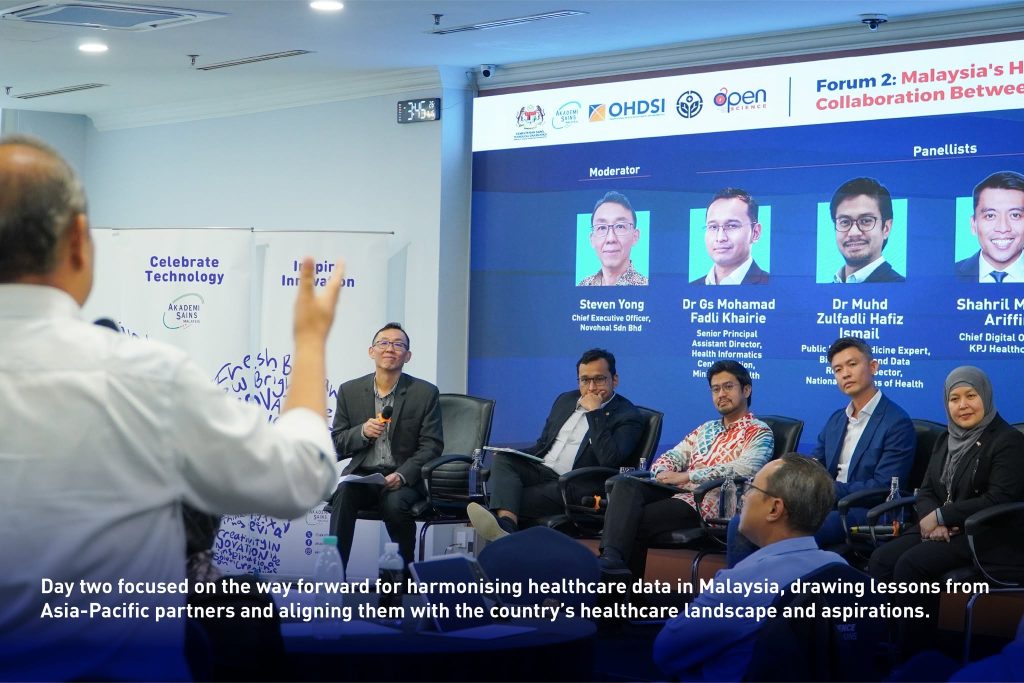
Key abbreviations used in this article:
- APAC (Asia-Pacific)
- EMR (Electronic Medical Record)
- OHDSI (Observational Health Data Sciences and Informatics)
- OMOP CDM (Observational Medical Outcomes Partnership Common Data Model)
- TRE (Trusted Research Environment)
From 14 to 15 July 2026, ASM organised the workshop “Connecting Health Data for Research and Innovation: The Role of Open Science and OHDSI”, bringing together stakeholders from the clinical, healthcare and research communities to discuss opportunities and challenges in managing health research data.
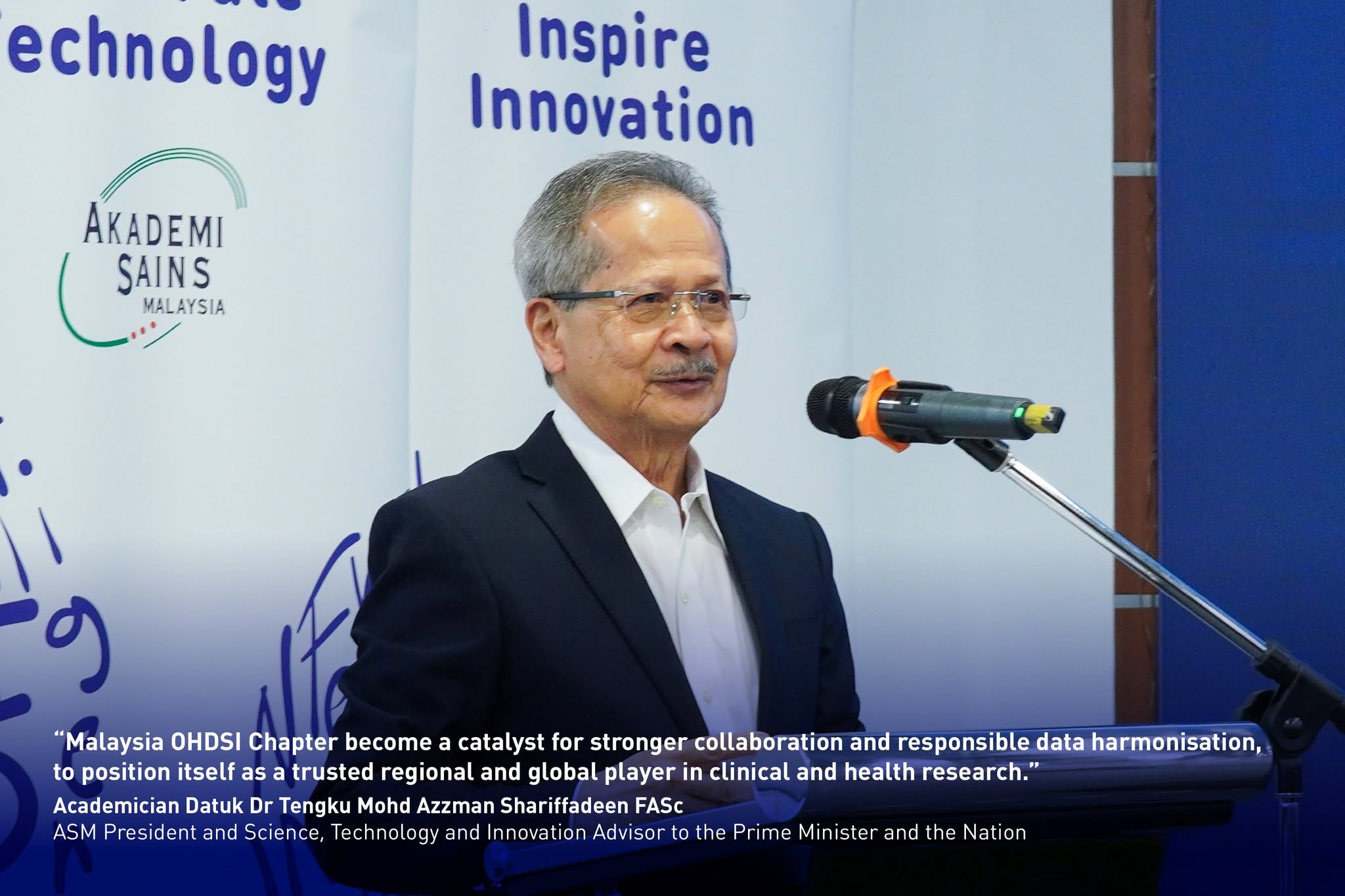
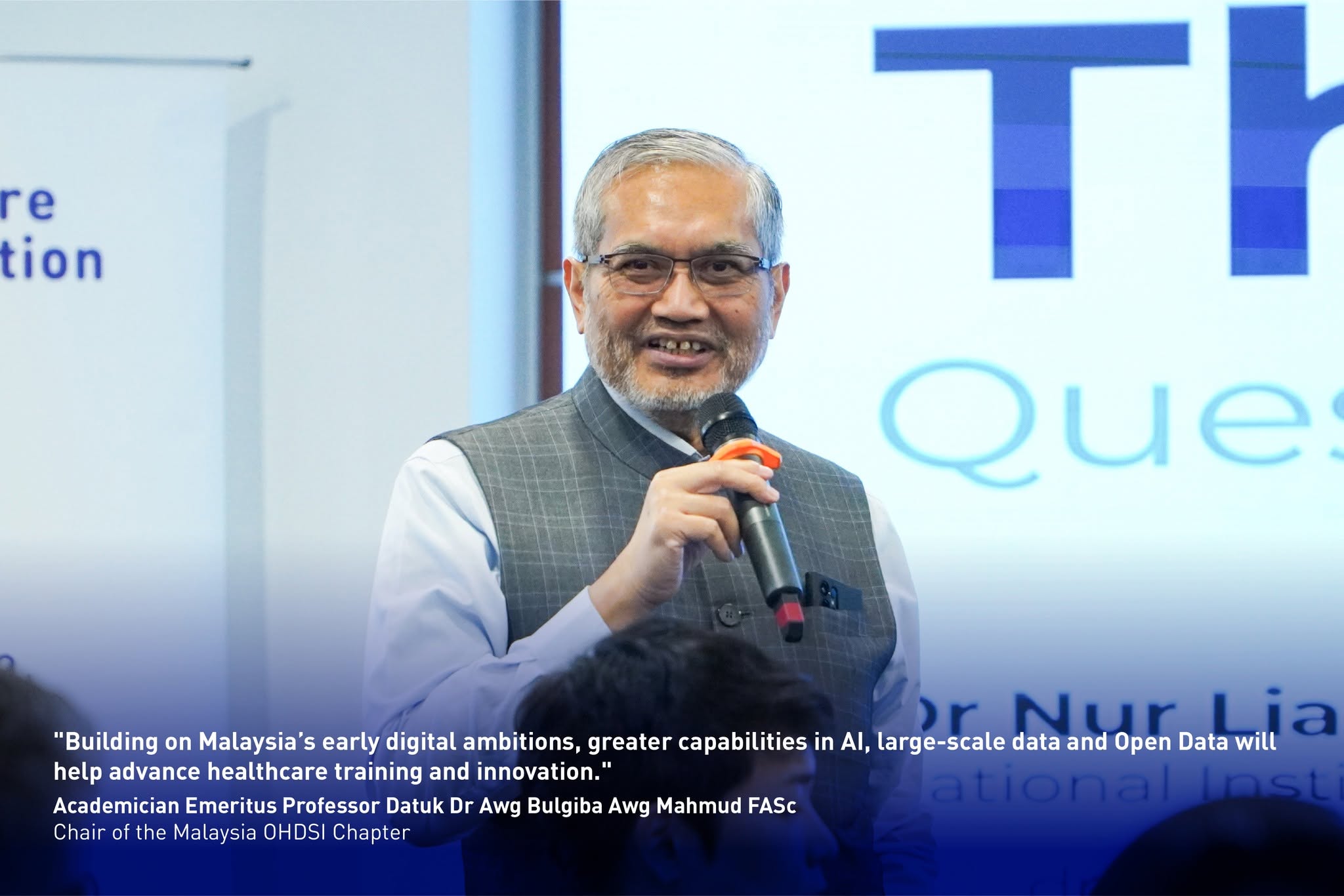
The programme also marked the launch of Malaysia’s Observational Health Data Sciences and Informatics (OHDSI) Chapter, which was officiated by the ASM President and STI Advisor to the Prime Minister and the Nation, Academician Datuk Dr Tengku Mohd Azzman Shariffadeen FASc. Academician Emeritus Professor Datuk Dr Awg Bulgiba Awg Mahmud FASc, Senior Fellow of ASM, chaired the Chapter.
The workshop was structured around a series of thematic sessions and discussion forums held over two days, bringing together experts from Malaysia and across the Asia-Pacific region to share insights on health data standardisation, interoperability, federated analytics, artificial intelligence (AI), and the adoption of the OHDSI and OMOP CDM ecosystem. The sessions explored key challenges, applications, and opportunities in advancing data-driven healthcare and research.
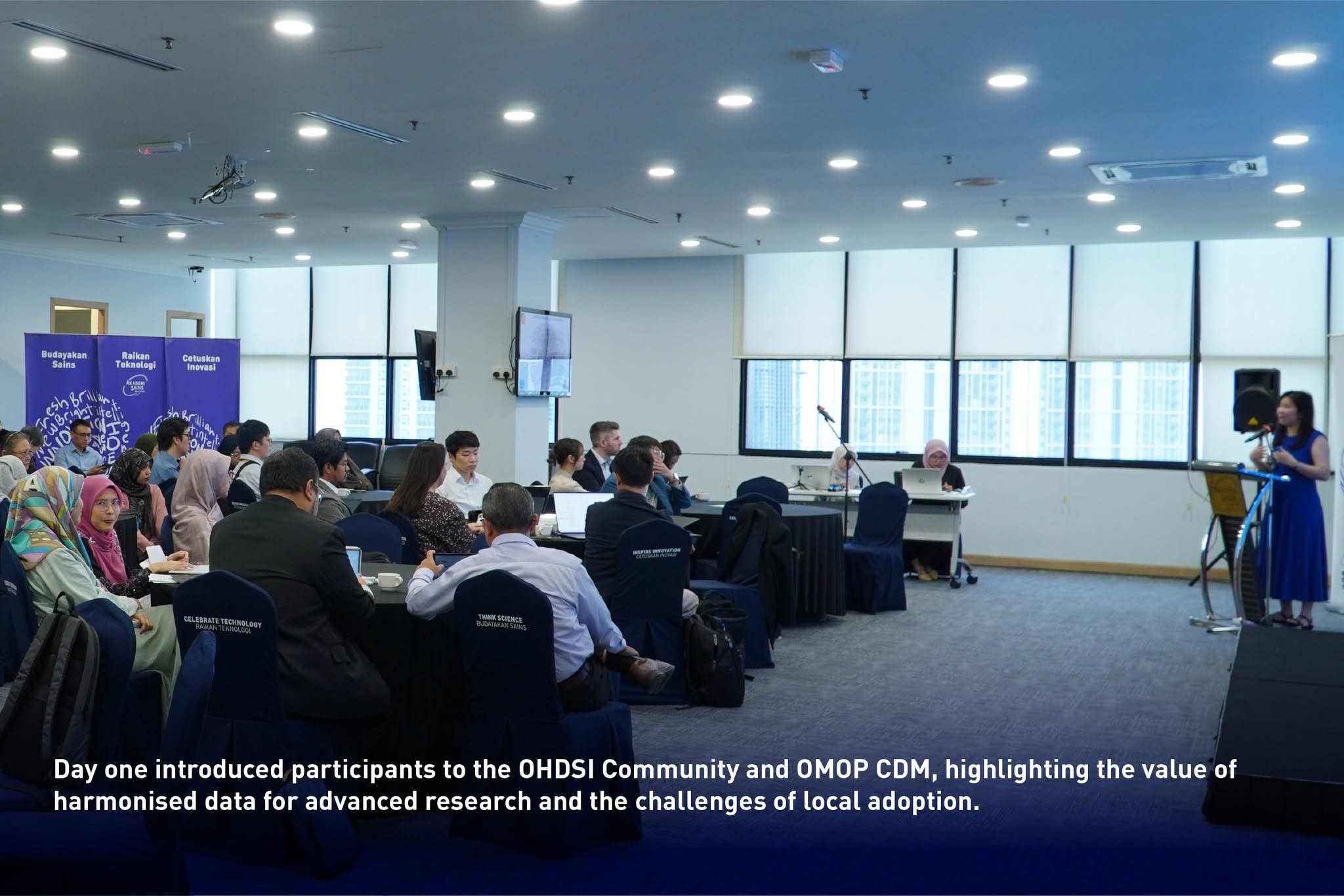
Introduction to OHDSI & Global Ecosystem: OHDSI APAC introduced its vision of making the Asia-Pacific region more researchable through research, education, and community engagement. The session highlighted the OMOP CDM, federated research, professional certification initiatives, and regional collaboration to strengthen research capacity and standardisation.
Value of OHDSI in Health System: explained how OHDSI helps healthcare systems convert fragmented data into reliable evidence through standardisation and federated research. Real-world examples from Singapore demonstrated its value in supporting AI, clinical decision-making, public health planning, and patient care.
OMOP CDM in Practice: showcased how OMOP CDM standardises healthcare data to support clinical characterisation, causal analysis, and predictive modelling. Case studies on hypertension, COVID-19, and regulatory safety research illustrated the benefits of high-quality, interoperable data for healthcare and policy decisions.
Federated Analytics, TRE & Open Science: presented OHDSI’s federated analytics approach, where data remains within institutions while shared analytical methods generate evidence. Trusted Research Environments (TREs), standardised workflows, and open science principles help ensure privacy, transparency, and reproducibility.
AI & Advanced Analytics using OMOP: explored using the OMOP CDM to develop scalable and trustworthy clinical AI. The session covered oncology-focused AI applications, reusable analytics tools, and the importance of maintaining data governance, ethics, interoperability, and data sovereignty.
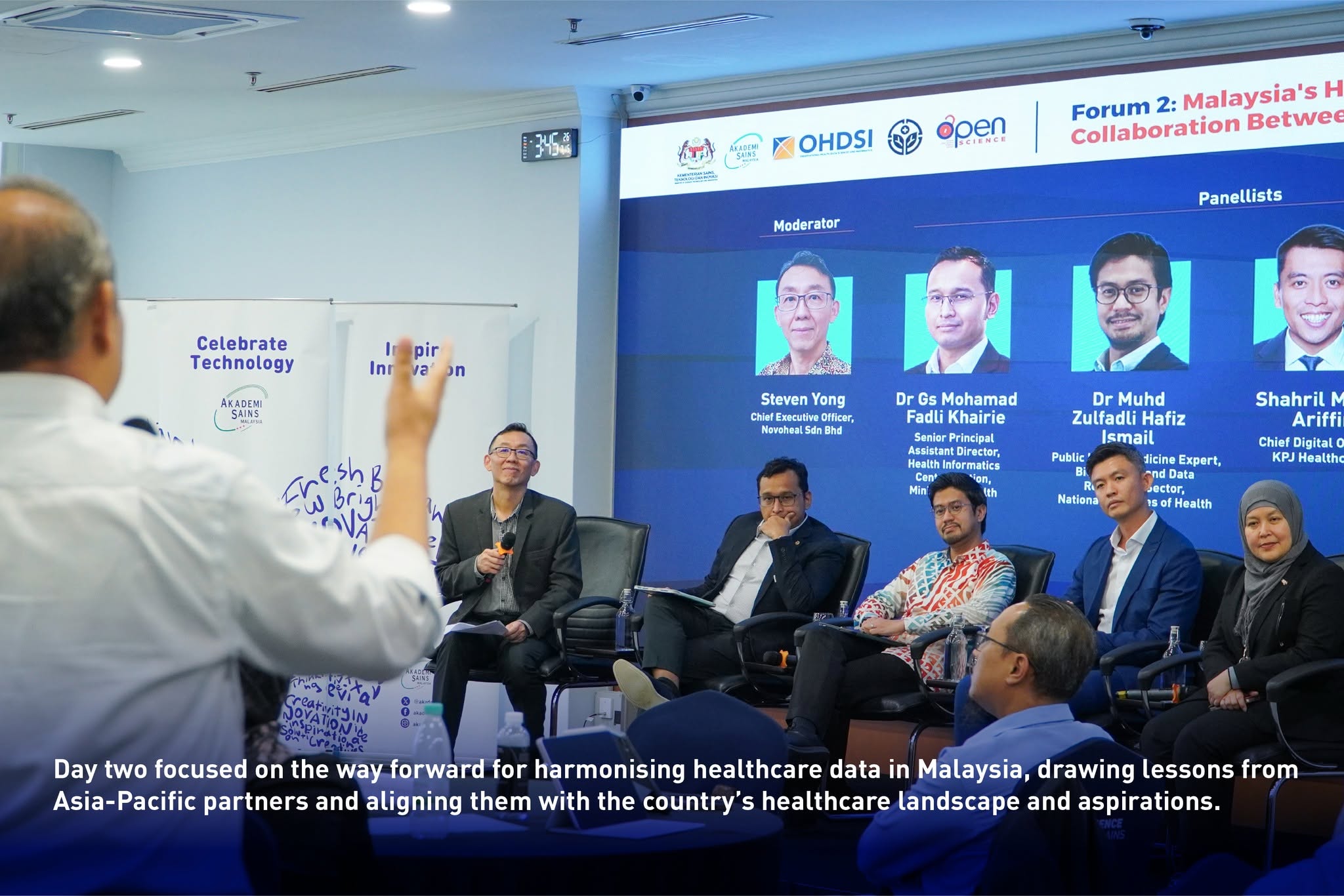
Launching of OHDSI Malaysian Chapter: highlighted how the Malaysia Chapter is a catalyst for stronger collaboration and responsible data harmonisation. Malaysia’s diverse population, maturing science base, clinical expertise and growing digital health agenda provide a strong foundation for high-quality clinical trials, real-world evidence-based studies and responsible health data innovation.
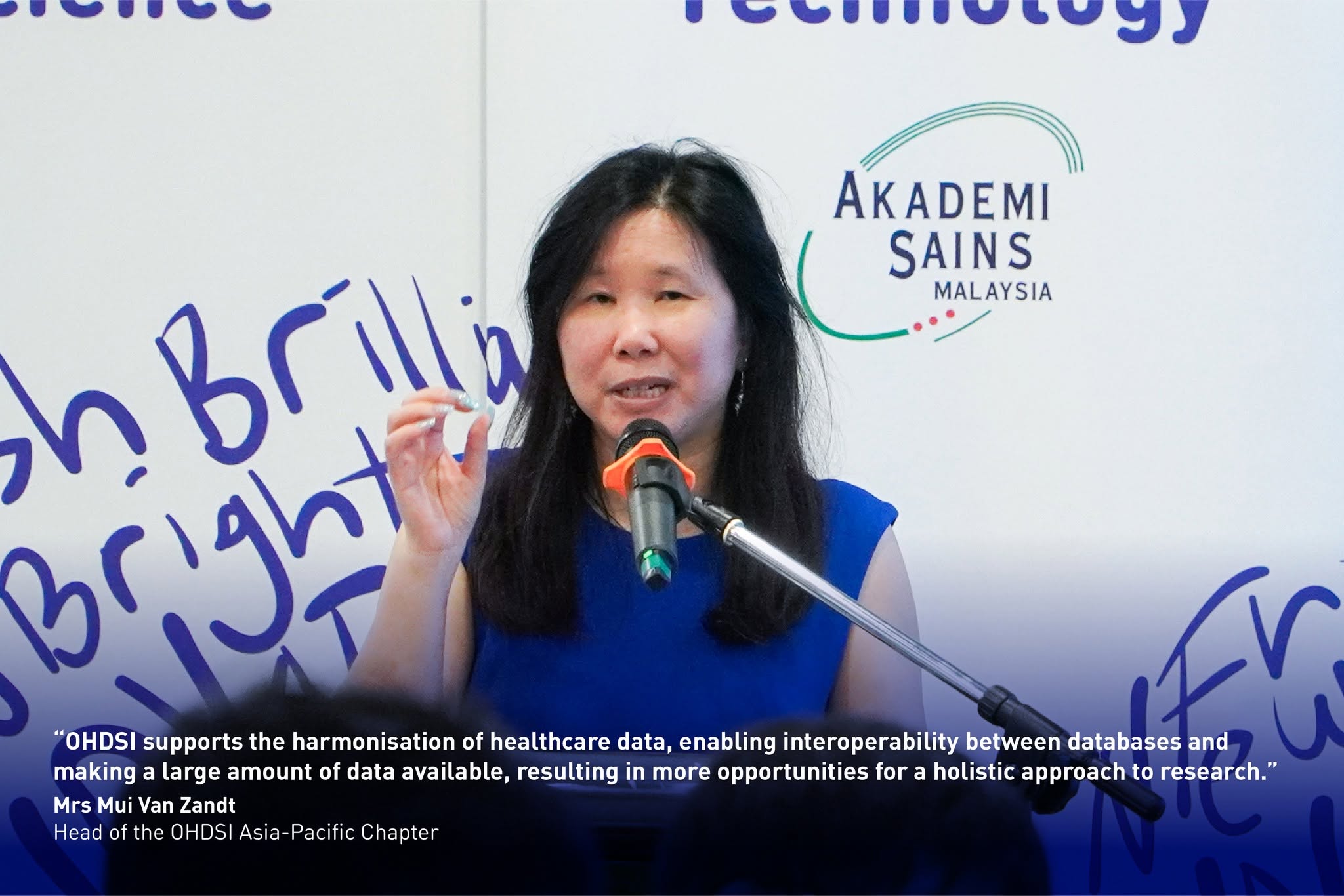
Malaysian Health Data Ecosystem: examined Malaysia’s evolving health data landscape, focusing on interoperability, clinician-led EMR development, data governance, and standardisation. The session underscored the importance of integrated systems and high-quality data for a future Learning Health System.
OHDSI Across Asia Pacific Forum: showcased how institutions across the region have adopted OHDSI through incremental implementation and targeted data mapping. Discussions highlighted federated data models, localisation of standards, data quality, and community-led training as drivers of collaborative research.
Introduction to the Harmonisation Manual for Clinical and Health Research Data using OMOP CDM: presented OMOP CDM as a framework for harmonising clinical and research data in Malaysia. The approach promotes interoperability, data quality, and standardisation to support evidence-based decision-making and participation in global health research.
Results of Landscape Study on Data Harmonisation: shared findings on Malaysia’s readiness for health data harmonisation, identifying challenges in governance, workforce capacity, data quality, and interoperability. Recommendations included stronger standards, workforce development, and collaborative frameworks for secure data sharing.
Malaysia’s Health Data Future Forum: explored the role of EMRs, data standardisation, and interoperability in advancing Malaysia’s digital health agenda. The forum highlighted the National Healthcare Data Warehouse, data safe havens, regulatory support, and sovereign AI as key enablers of better healthcare decisions and governance.

The workshop reinforced the importance of collaboration, harmonisation and responsible data governance in advancing health research. With the launch of the Malaysia OHDSI Chapter, stakeholders took a significant step toward building a connected, research-ready health data ecosystem that supports innovation, evidence-based decision-making, and better healthcare outcomes.