
ASM, MIGHT and INGSA Discuss Strategic Collaboration
August 14, 2026
ASM and MOSTI Strengthen Malaysia’s Global STI Partnerships
August 14, 2026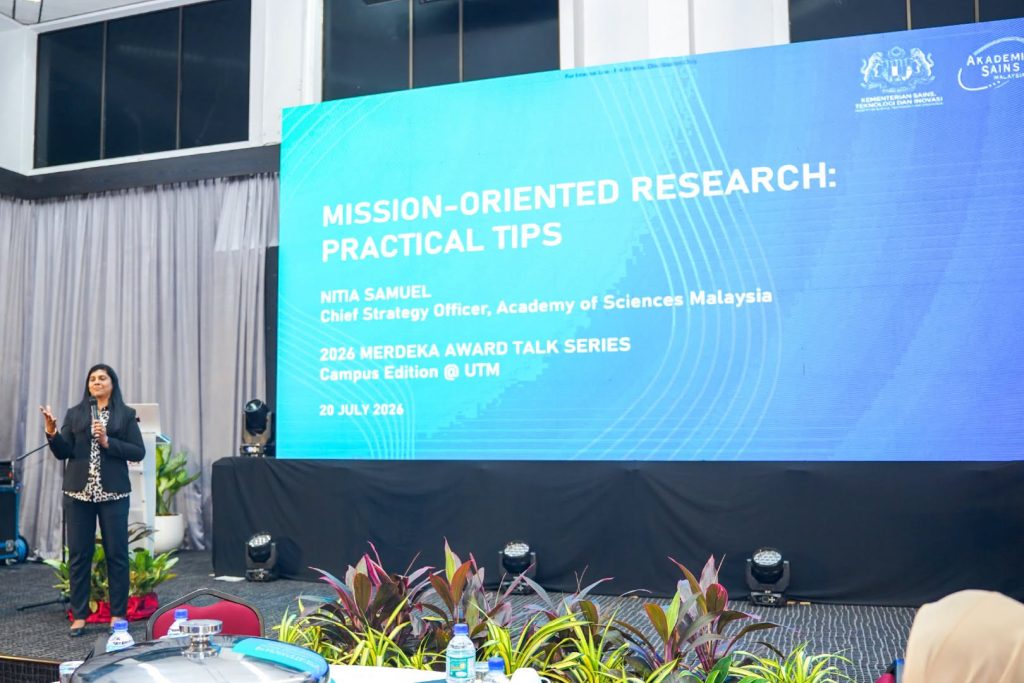
On 20 July 2026, ASM presented “Mission-Oriented Research: Practical Tips” at the 2026 Merdeka Award Talk Series: Campus Edition@UTM.
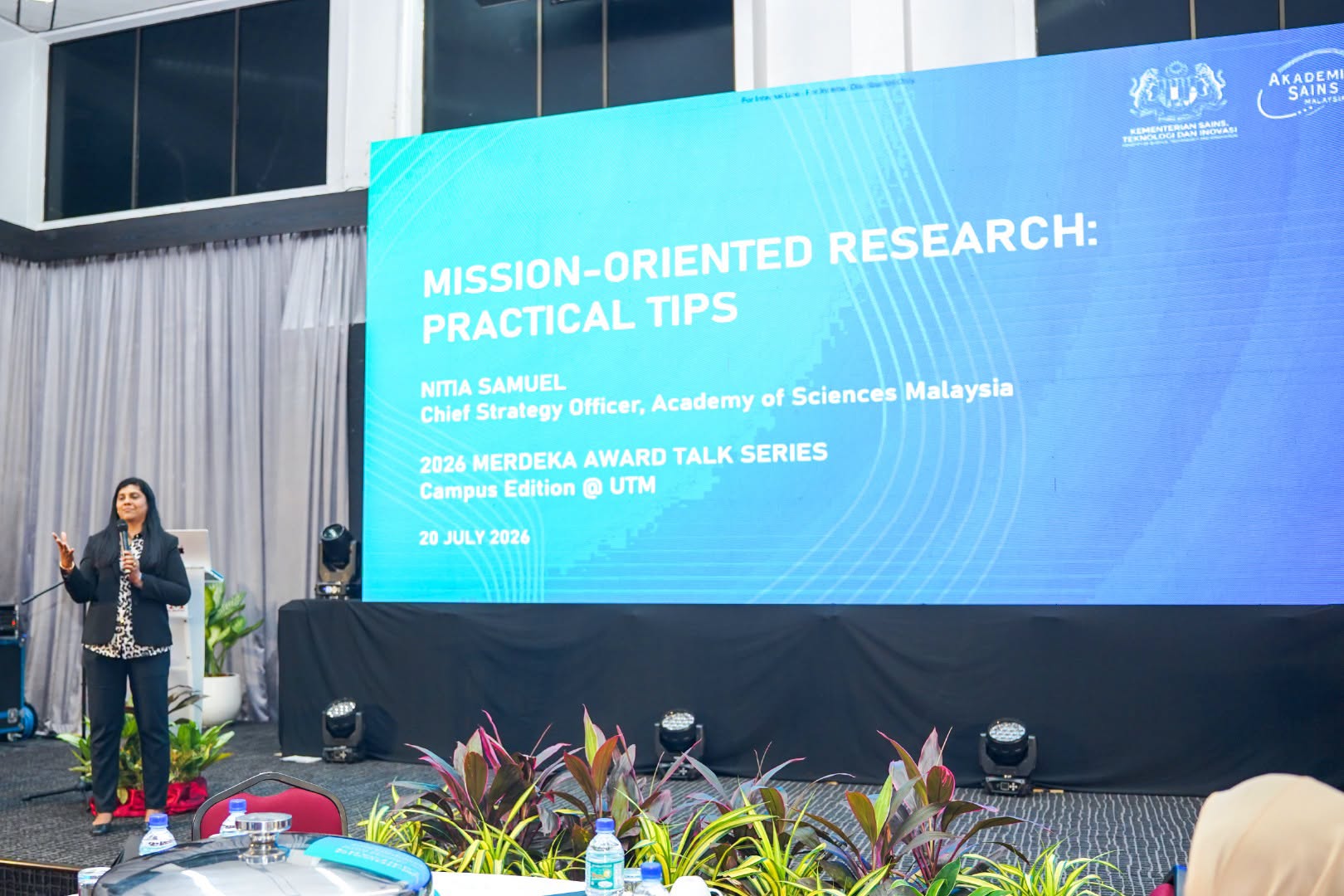
Delivered by Chief Strategy Officer Puan Nitia Samuel, the session provided students, young researchers and academics with practical guidance on developing impactful transdisciplinary research through a mission-oriented approach, aligning projects with national priorities and real-world needs, and creating a clearer pathway from research to implementation and impact.
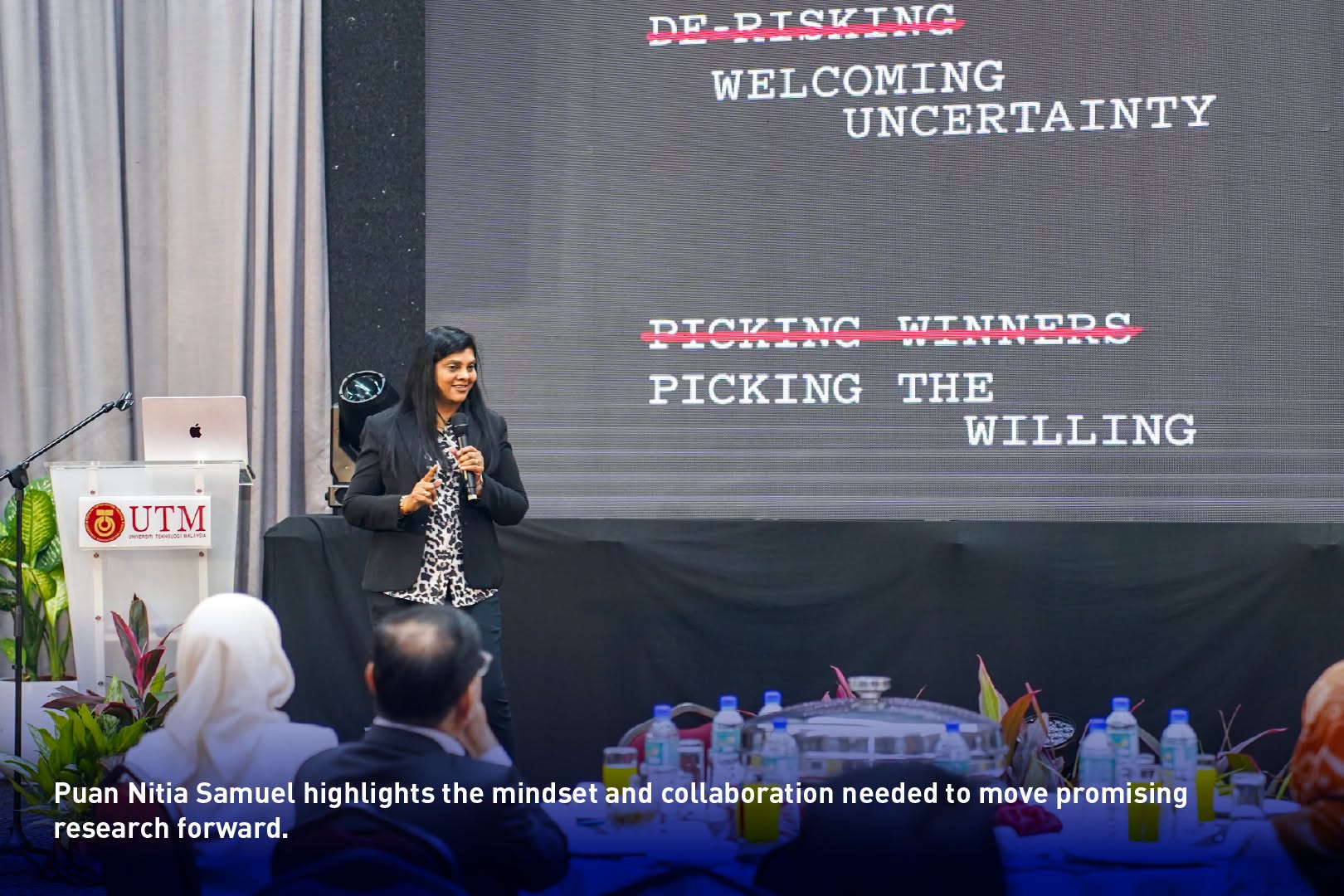
Through this knowledge-sharing session, ASM reinforced the importance of moving beyond research outputs towards solutions that create meaningful benefits for society and the nation. Puan Nitia also highlighted the importance of adopting a mission-oriented approach to research and innovation to address Malaysia’s most pressing national challenges.
These challenges, ranging from ageing populations and climate change to food security and technological disruption, require integrated, transdisciplinary solutions rather than conventional silo-based research approaches.
The presentation outlined how Mission-Oriented Initiatives (MOIs) bring together research, policy, industry, and community efforts around clear, measurable societal outcomes. Unlike traditional R&D, which focuses primarily on outputs such as publications and patents, mission-oriented research prioritises real-world impact through cross-sector collaboration, adaptive policymaking, and strategic funding models.
Focusing on how researchers and academia alike can forge a mission-oriented approach, Puan Nitia shared practical tips that can be adopted at the innovation level. By asking, “What will move this solution into impactful real use?”, researchers need to frame the use case by identifying one key adoption problem. Then, they need to de-risk the pathway by building translation evidence early. Lastly, they need to prove adoption by packaging it for the next handover. This way, researchers will be better able to provide solutions that are impactful and fit people’s needs.
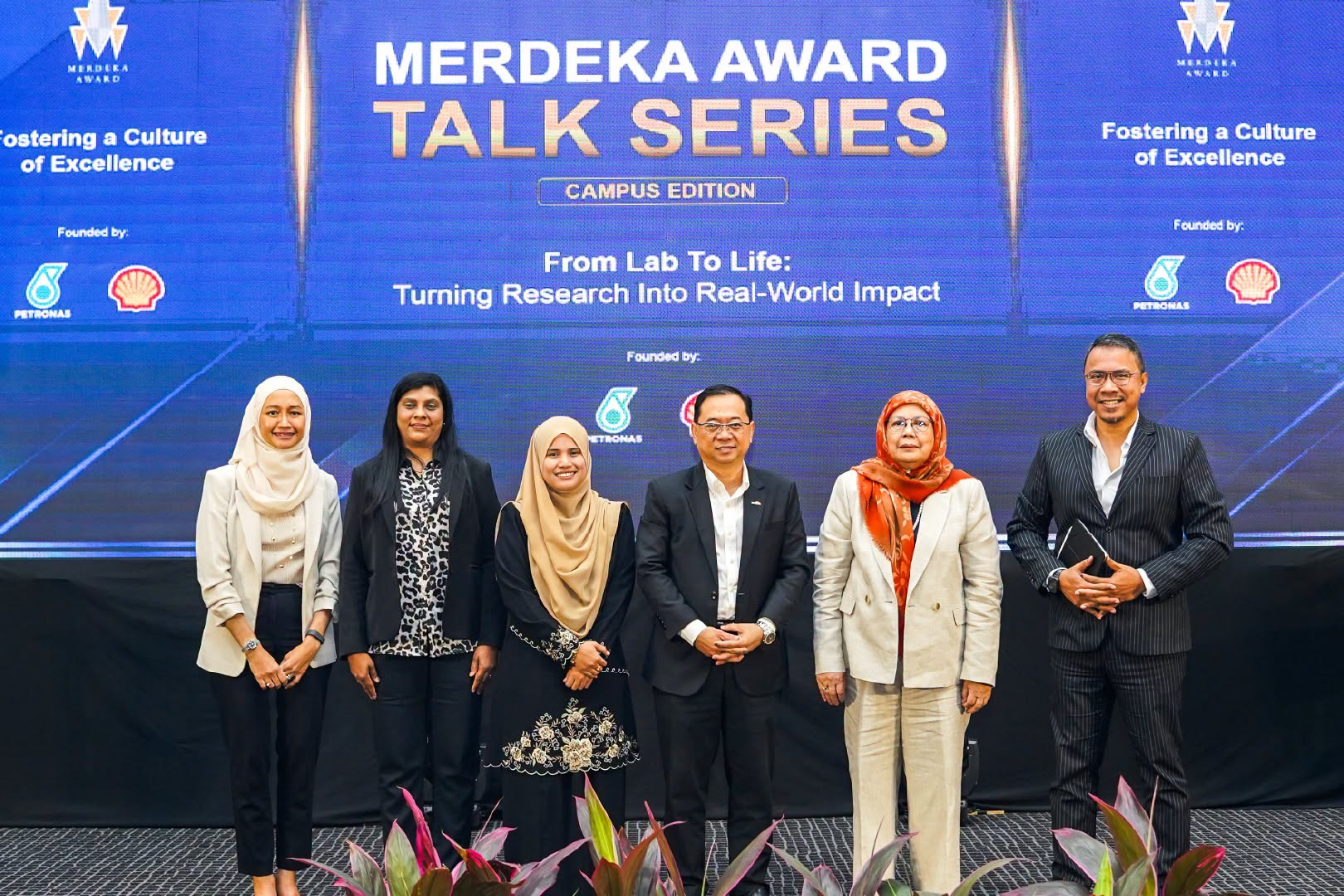
(Left-right): Ms Mufidah Mahmud, Pn Nitia Samuel, Syaza Soraya Sauli, Professor Datuk Ts Ir Dr Ahmad Fauzi Ismail FASc, Professor Emeritus Dato’ Dr Noraini Idris FASc and Dr Abdullah bin Mohad Nawi.
The session also emphasised the Innovation Readiness Level (IRL) framework, which supports researchers in moving innovations from the laboratory towards adoption by addressing technology, market, funding, team and sustainability readiness. The key takeaway for researchers was clear: shift the focus from “my research output” to “our impactful solution”.