
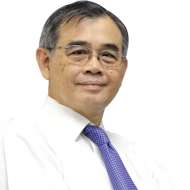
Medicine; Clinical Pathology; Hematology; Stem Cells
Professor Cheong was born in Penang. As a secondary school student, he was already active in society works; he was the founding president of the Interact Club and chief editor of the school magazine. Upon graduating from the M.B.,B.S. programme of Universiti Malaya in 1975, he began his medical career as a house officer in the Hospital Besar Kuala Lumpur (HKL). Like many of the senior pathologists in Malaysia, Professor Cheong received his postgraduate pathology training in the Royal Postgraduate Medical School, University of London, located at the Hammersmith Hospital, London, the United Kingdom. After completing the postgraduate Diploma in Clinical Pathology with distinction in 1979, he was offered a position in the prestigious Department of Haematology, where he had the opportunity to work with the late Professor Sir John Dacie, distinguished for his pioneering works in haematology in the United Kingdom. While in the United Kingdom, he successfully completed his membership examination, the MRCP(UK). He returned home in September 1980 and became Lecturer in the Department of Pathology, Faculty of Medicine, Universiti Kebangsaan Malaysia (UKM). In 1993, he was promoted to full professor and served the University till his compulsory retirement in 2005. Between 1985 and 1993, he served as the Head of the Department of Pathology for 8 years (4 terms). During this period, he set up the Master of Pathology Programme which offered the 4-year specialist training in haematology, anatomical pathology, chemical pathology, medical microbiology and forensic Pathology. This programme has produced more than 400 pathology specialists for the country. As he is also qualified in clinical haematology, he established the first clinical haematology service in the HKL under the UKM in the early eighties. In 1997, he was appointed the founding Head of the Department of Diagnostic Pathology Services when the new Hospital Universiti Kebangsaan Malaysia (HUKM) was commissioned and remained as its Head (8 years) until his retirement. During this period, he set up the blood bank services, molecular haematology services, advanced haemostasis services and haemopoietic stem cell transplantation laboratory services. Besides, with the official joint appointed in the Department of Medicine, he established the clinical haematology services in HUKM which included the special day care and the bone marrow transplantation services for the teaching hospital and served as the sole supervisor for trainees of Master of Internal Medicine for clinical haematology rotation (on record 110 supervised and many are now distinguished medical specialists in different subspecialties of internal medicine). He performed the first bone marrow transplant in HUKM in September 1999. He is active in both clinical and laboratory research and has successfully supervised or co-supervised 23 doctorates (MD/PhD), 29 research Masters, and 26 Master of Pathology dissertations to date. Apart from clinical trials and studies in basic sciences, he pioneered research in human stem cells and immune cells for cancer treatment. Two research products (HbA2 and G6PD screening kits) were successfully commercialised while in UKM and results from cellular research culminated in two industry start-ups on cell-based clinical services which he pursued after retirement. The research effort has resulted in 206 publications and more than 400 academic presentations. After his retirement, he was conferred the honorific Emeritus Professorship by the Universiti Kebangsaan Malaysia in 2007. In recognition of his research works, he was elected as Fellow of the Academy of Sciences of Malaysia in 2001, Foundation Fellow of the Faculty of Science of the Royal College of Pathologists of Australasia in 2011, and Senior Fellow of the Academy of Sciences of Malaysia in 2021. Currently he is the Foundation Dean of the Faculty of Medical and Health Sciences, Universiti Tunku Abdul Rahman (UTAR) since 16 November 2009. To date, the Faculty has graduated more than 650 graduates in medical and health sciences. Professor Cheong is active in professional organisations. He was elected as Secretary of the Malaysian Society of Pathologists (MSOP) in 1987 and President of the MSOP in 1991. He was elected Member of the Academy of Medicine in 1987. While in the Academy, he reactivated the idea of forming a Chapter of Pathology within the Academy of Medicine which later led to the merger of the Chapter of Pathology with the MSOP to become the College of Pathologists, Academy of Medicine of Malaysia (CPathAMM) in 1999. He was elected Vice-President in 2000 and President of the CPathAMM in 2008. Under his leadership, a proposal to establish a company to provide external quality assurance programmes to pathology laboratories was approved by the CPathAMM in 2010. The company named MCPath QAP Sdn. Bhd. was eventually registered in January 2014 and is now in operation. In 2012, he was instrumental in bringing the CPathAMM into the International Liaison of Pathology Presidents (ILPP) which initiated the Inaugural International Pathology Day in November 2014. Professor Cheong is also active in community service. In 1994, he became the Foundation Councillor of the National Cancer Council (MAKNA), a not-for-profit charity organisation to serve cancer patients. He was instrumental in bringing about the collaboration between the MAKNA and the Hospital UKM in 1997 to establish the MAKNA-HUKM Cancer Institute, which was subsequently renamed as the PPUKM-MAKNA Cancer Centre in 2006. This collaboration remains active today. Meanwhile, he actively assisted MAKNA to distinguishes itself from other similar organisations by providing funding for research; many cancer researchers have since benefited through the grants provided by the MAKNA. In addition, he established the MAKNA Cancer Research Award in the Academy of Sciences of Malaysia which has supported many young scientists of the Country since 2001. Currently he serves as the Vice-President of the MAKNA, which is now an organisation with global outreach.